


If you have bridged crypto to a Layer 2 like Optimism, Arbitrum, or Base, you have probably wondered: what happens to my money if that network just… stops? Fair question — and it has a good answer.
Every serious Ethereum rollup is built with an escape hatch: a guaranteed way to pull your funds back to Ethereum mainnet even if the Layer 2’s sequencer goes offline, censors you, or the company behind it disappears. It is enforced by smart contracts on Ethereum itself — not a rumor, not a backup plan.
In this guide: what an escape hatch actually is, why rollups need one, the exact steps of a forced withdrawal, and how Optimism, Arbitrum, and Base each handle it — in plain English, with no assumed knowledge.
📑 In This Guide
id=”what-an-escape-hatch-is”>What an Escape Hatch Actually Is
An escape hatch is a set of smart contracts on Ethereum mainnet that lets you withdraw your funds from a Layer 2 without asking the Layer 2’s permission. Think of it like a fire exit in a building: you hope you never use it, but the building is not considered safe without one.
It works because a rollup posts its transaction data to Ethereum — that is what makes it a rollup. Everything needed to prove what you own already exists on mainnet, so if the Layer 2 goes silent, Ethereum still has the receipts and the bridge contracts can verify your withdrawal and release your funds.
It has two halves: forced inclusion — a mainnet contract that accepts your transaction directly, which the Layer 2 must process — and the withdrawal path — a mainnet contract that releases your funds once the security waiting period passes. No single company stands between you and your money.
Why Layer 2s Need One
Most Layer 2s today rely on a single operator — the sequencer — to order transactions and keep the chain moving. It is fast and efficient, but it is also a single point of failure.
Now imagine the uncomfortable scenarios: the sequencer’s servers go down for a day, the operator starts censoring transactions, or the company behind the chain shuts down. Without an escape hatch, your funds sit behind a door whose only key is held by someone who has stopped answering.
This is why researchers rank rollups by stages of decentralization — a working escape hatch is one of the requirements for a mature rollup. With it, you trust Ethereum’s rules. Without it, you trust a company’s uptime. Very different promise.
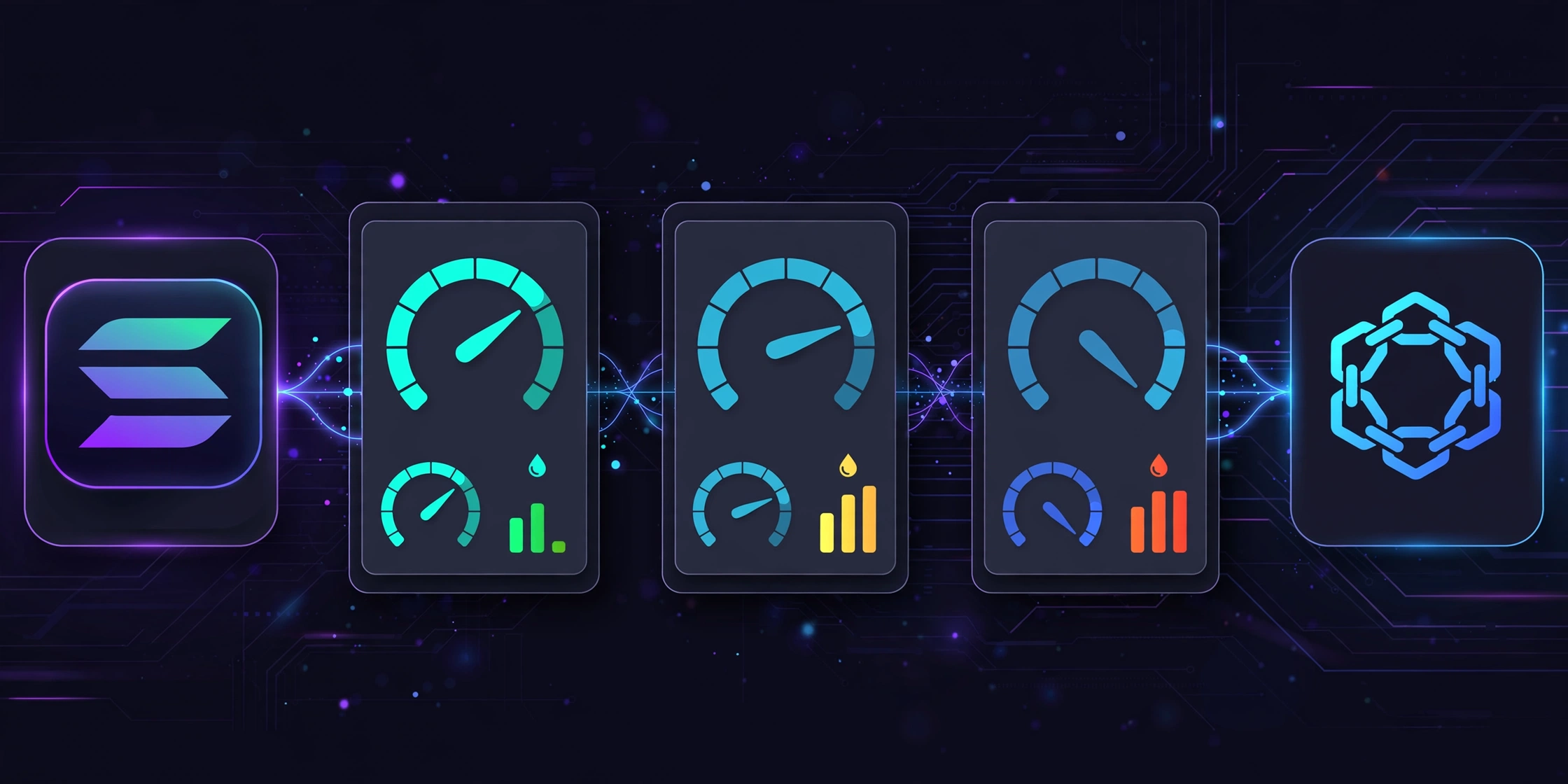
How Forced Withdrawals Work, Step by Step
The standard and emergency paths share most of these steps — the emergency part is step 2.
In the chain’s official bridge app, click “withdraw” to lock your L2 tokens and create a withdrawal record. If the Layer 2 is working, always use this normal path — cheapest and simplest. New here? 10 Steps To Bridge Ethereum to Optimism – Beginner Friendly covers the standard flow.
Every major rollup has an “inbox” contract on Ethereum that accepts transactions directly from anyone. On Arbitrum (the Delayed Inbox), the sequencer must include yours within about 24 hours. On Optimism and Base, portal deposits are force-included — the chain cannot advance past them. No website, no app, no permission needed.
Optimistic rollups give watchers a fraud-proof window to challenge dishonest withdrawals. It feels slow, but it is the security mechanism the whole system rests on — and no escape hatch can skip it.
Once the window closes, a final transaction to the mainnet bridge contract releases your funds to your Ethereum address — usually submitted by you in the official bridge interface.
Check your mainnet wallet balance. If anything looks wrong, look up your address by typing etherscan.io into your browser yourself — never trust “support” DMs.
Optimism vs Arbitrum vs Base: How Each Handles It
All three are optimistic rollups: an inbox contract on Ethereum for forced transactions, and a ~7-day challenge window before withdrawals finalize. The details differ in ways worth knowing.
Optimism runs on the OP Stack. Deposits through the OptimismPortal contract on mainnet are force-included — the chain cannot move past them. Withdrawals start on the L2, wait about 7 days, then finalize through the portal. Permissionless fault proofs mean anyone can propose chain state, so a vanished operator cannot freeze withdrawals. Walkthrough: 10 Steps To Bridge Ethereum to Optimism – Beginner Friendly.
Arbitrum uses a Delayed Inbox on Ethereum. Anyone can push a transaction into it, and the sequencer must include it within about 24 hours — otherwise the chain’s own rules treat it as stalled. The strongest force-inclusion guarantee of the three on paper. Withdrawals use the canonical bridge with the same ~7-day challenge period, executed on mainnet through the Outbox contract. Standard route: 2 Minute Tutorial: Bridge Ethereum to Arbitrum (Eth, Arbitrum).
Base is built on the OP Stack, so it mirrors Optimism: portal-style mainnet contracts, forced deposits, the same ~7-day window. Operated with Coinbase’s involvement — the escape-hatch math is identical either way. New to Base? How To Bridge Ethereum to Base: 3 Minute Easy Method.
| Network | Escape mechanism | Time delay | Best for |
|---|---|---|---|
| Optimism | Force-included deposits via the OptimismPortal contract; withdrawals finalized through the portal after the challenge window | ~7 days | Standard OP Stack path with permissionless fault proofs |
| Arbitrum | Delayed Inbox: anyone can force-submit transactions the sequencer must include within ~24h; withdrawals via the Outbox contract | ~7 days (plus ~24h force-inclusion window) | Strongest on-paper force-inclusion guarantee |
| Base | Same OP Stack design as Optimism — portal contracts, forced deposits, same challenge window | ~7 days | Coinbase/Base users who want the familiar OP Stack flow |
What It Costs (Plain English)
No “escape fee” goes to the rollup — you only pay Ethereum network costs:
- Starting the withdrawal on the L2: a normal, cheap Layer 2 transaction — usually a few cents.
- Forced L1 transaction (emergencies only): mainnet gas — a few dollars when quiet, much more when congested.
- The 7-day wait: free, but your money is locked and idle while you wait.
- Finalizing on mainnet: one more mainnet transaction, so more gas.
- Practical tip: many users keep $20–$50 in ETH on mainnet as an emergency gas fund, separate from bridged funds.
5 Beginner Mistakes to Avoid
1. Using a third-party bridge and expecting the escape hatch to cover it. Escape hatches only work through the canonical (official) bridge. If you moved funds with across.to, stargate.finance, hop.exchange, or a centralized exchange, your tokens traveled through their contracts — the L2 escape hatch does not apply. Type any address into your browser yourself; never click a link someone sends you.
2. Thinking it is instant. The ~7-day challenge period is mandatory on optimistic rollups — it is the fraud-proof window the system rests on. Anyone advertising “instant” escape-hatch withdrawals is selling you something.
3. Having no ETH on mainnet for gas. Steps 2 and 4 are mainnet transactions: no mainnet ETH, no exit. The most common way people get stuck — and the easiest to prevent.
4. Trusting a random “recovery tool” website. If a Layer 2 ever has a serious outage, scammers spin up fake “emergency withdrawal” sites within hours. They look official — and they drain your wallet the moment you connect it.
5. Assuming every Layer 2 works the same. This guide covers optimistic rollups (Optimism, Arbitrum, Base). ZK rollups finalize faster but have their own mechanics; validiums and app-chains may have weaker — or no — escape guarantees. Check how your network handles exits before bridging significant funds to it.
Frequently Asked Questions
Only indirectly. The hatch covers assets in the canonical bridge — funds in your L2 wallet that arrived via the official bridge. Tokens inside a lending pool or DEX must first be withdrawn to your L2 wallet, then exited to mainnet.
Not through the canonical bridge while the escape hatch is live. A forced transaction sent to the inbox contract on Ethereum needs no one’s cooperation, and it cannot be selectively blocked. Caveat: most L2s still have a security council able to upgrade contracts in an emergency — a trust assumption being phased out — but it cannot quietly single out your funds.
Plan for about 7 days, plus confirmation time for your two mainnet transactions. The challenge period is fixed on Optimism, Arbitrum, and Base — it cannot be shortened, skipped, or paid off.
For the normal path, no — official bridge apps walk you through it. A true emergency requiring direct L1 contract interaction (e.g., a block explorer’s contract tab) does get technical. Treat the hatch as your guarantee, not your daily tool.
Then the escape hatch does not cover those funds. Third-party bridges route your tokens through their own contracts and liquidity, not the rollup’s canonical bridge — so the forced-withdrawal mechanism has nothing to release.
The Bottom Line
An escape hatch is why you can treat a Layer 2 as safe: your funds are secured by Ethereum’s rules, not by a company’s servers staying online. If the sequencer disappeared tomorrow, you could still force your way out through mainnet contracts — no permission required.
The price of that guarantee is patience and gas: about 7 days of waiting and two mainnet transactions. Keep a small ETH reserve on mainnet, use the official bridge for meaningful amounts, and never trust a “recovery tool” that appears during an outage.
You will probably never use your escape hatch — the best safety features are the ones you never notice.
This guide is for education only — not financial advice.


14 Comments
Pingback: How to Add Arbitrum to MetaMask in 2026 – Step-by-Step for Beginners - IBTC247
Pingback: How to Add Optimism to MetaMask: Quick 2026 Setup Guide - IBTC247
Pingback: What Are Altcoins? Beginner's Guide Beyond Bitcoin
Pingback: 8 Steps to Bridge Ethereum to Linea in 2026 – Beginner Tutorial - IBTC247
Pingback: 9 Steps to Bridge Ethereum to Scroll in 2026 – Easy Guide - IBTC247
Pingback: 7 Steps to Bridge Ethereum to zkSync in 2026 – Beginner Guide - IBTC247
Pingback: How to Add Scroll Network to MetaMask: 2026 Guide
Pingback: How to Bridge ARB to ETH: 4 Withdrawal Methods
Pingback: How to Check If a Layer 2 Network Is Safe: Beginner's Checklist - IBTC247
Pingback: What Happens to Your Crypto If a Layer 2 Goes Offline? - IBTC247
Pingback: What Is a Sequencer in Crypto? Layer 2 Explained Simply (2026) - IBTC247
Pingback: What Is a Forced Withdrawal? Your L2 Safety Net Explained - IBTC247
Pingback: Bridge Transaction Stuck? What to Do Step by Step (2026) - IBTC247
Pingback: Why Are L2 Sequencers Centralized? Risks Explained - IBTC247