


🎓 In this expert guide
Bridging SOL to BNB is easy to do and easy to do badly. This guide is the expert version: not a speed-run, but the full technical picture — which execution models exist, what infrastructure you’re actually trusting with each, how finality differences between Solana and BNB Chain shape settlement, and how to read quotes, monitor transfers, and verify arrivals like a professional. If you just want the fast version, see our 5-minute SOL → BNB walkthrough; everything here assumes you already know what a bridge is and want to do it well.
🎓 Expert framing: A SOL → BNB transfer is really two separate problems: (1) message passing — convincing the destination chain the source event happened, and (2) liquidity — who fronts the BNB or BNB-denominated asset on arrival. Lock-and-mint designs (Wormhole) solve liquidity by minting a wrapped token; intent designs (deBridge, Mayan, Relay) solve it with solvers competing to fill your order from their own inventory. Every route choice below is a trade-off between these two models — speed, cost, and trust assumptions included.
Why SOL → BNB Is a Two-Architecture Problem
Solana and BNB Chain don’t just run different software — they assume different things about the world:
- Finality: Solana produces blocks on ~400ms slots with fast optimistic confirmation; BNB Chain produces blocks roughly every 3 seconds under Proof-of-Staked-Authority. Bridges must decide how long to wait before treating a source transaction as irreversible — wait too little and a reorg invalidates the transfer; wait too long and settlement crawls.
- Address formats: Solana uses base58 addresses (Phantom, Solflare, Backpack); BNB Chain is EVM, using 0x addresses (MetaMask, Rabby, Trust Wallet). Funds only arrive at addresses on the correct chain — there is no such thing as “sending SOL to a BNB address.”
- Gas tokens: every step on Solana costs fractions of a cent in SOL; every step on BNB Chain costs BNB. A stranded arrival (tokens with no BNB for gas) is one of the most common avoidable mistakes.
The practical upshot: your transfer has a source leg (Solana signature, sub-cent), an attestation leg (validators, guardians, or solvers confirming the event), and a destination leg (BNB-denominated asset arriving on BNB Chain). Knowing which leg you’re in at any moment is what separates a calm transfer from a panicked one.
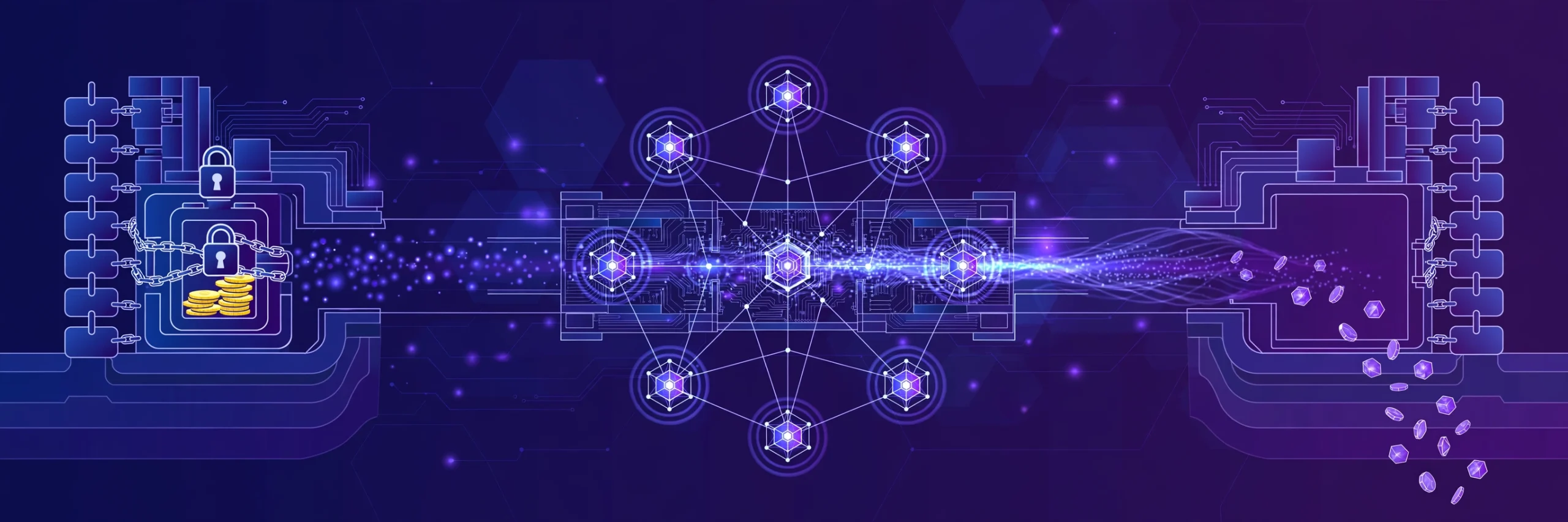
Execution Models and Trust Assumptions, Compared
Don’t compare routes by marketing — compare them by who holds what risk while your funds are in flight:
| Route | Execution model | Who holds principal risk in transit | Typical SOL → BNB time | Expert verdict |
|---|---|---|---|---|
| deBridge | 0-TVL intent: validators relay messages, solvers fill orders | Solver capital backs speed; no pooled liquidity to drain | Seconds to minutes | Best default — native delivery, no pool risk |
| Mayan Finance (Swift) | Intent: auction-based solver competition | Solvers; auction finds tightest pricing | ~12 sec reported for BNB Chain corridor | Fastest lane; watch liquidity depth on large sizes |
| Wormhole Portal | Lock-and-mint, 19-guardian set | Guardian multisig + wrapped-token peg risk | ~1–15 min | Deepest track record; you receive a wrapped asset |
| Relay | Intent-based relayer fills | Relayer inventory; spreads can widen on size | Often under 10 seconds | Excellent for small–mid sizes |
| Squid (Axelar) | Aggregator: routes via Axelar messaging + DEXs | Axelar validator set + aggregator route risk | ~1–5 min | Best-execution shopping across routes |
| Exchange (Binance/Kraken) | Deposit → trade → withdraw | Custodial: the exchange itself | Minutes to hours | Familiar; KYC, spreads, withdrawal fees |

The column that matters most is the third one. If a bridge gets exploited, wrapped tokens can depeg — a real, repeated risk category in bridge history. Intent-based models sidestep wrapping entirely: you receive native assets, not synthetics. That doesn’t make them risk-free (solver economics and oracle assumptions are their own risk surface), but it’s a structurally different — and generally cleaner — risk to hold.
7 Steps: The Expert SOL → BNB Playbook
1Choose your execution model first, not your website
Decide by amount and priority: under ~$10k → an intent route (deBridge, Mayan, Relay) for native delivery and speed. Larger amounts → split across two routes or compare an aggregator (Squid) against an exchange leg, because solver spreads and liquidity depth degrade with size. If you need wrapped SOL exposure on BNB Chain specifically (e.g. for a protocol that only accepts the Wormhole-wrapped version), only lock-and-mint gets you there. Document the choice — you want to be able to explain to yourself why you trusted this path if anything goes wrong.
2Set up both chains properly — including the BNB reserve
Solana side: Phantom/Solflare with SOL (keep a small reserve — transactions cost fractions of a cent, but you still need some). BNB Chain side: an EVM wallet with the BNB Smart Chain network added — chain ID 56, RPC https://bsc-dataseed.bnbchain.org, explorer bscscan.com. Critically: keep a small BNB reserve (roughly 0.003–0.005 BNB covers typical approvals and claims) in the receiving wallet before the transfer lands. A filled order with no gas money is a solved problem arriving at a locked door.
3Read the quote like a professional
Open the route (typed or bookmarked — never via ads or DMs) and set Solana → BNB Chain. Then interrogate the quote: (a) execution price vs. spot — the receive amount minus the fee tells you the effective rate; compare it across two routes, not against marketing; (b) rate lock — intent quotes are typically locked for a short window; if it expires, you re-quote into new market conditions; (c) receive asset — native BNB (or your chosen asset) vs. a wrapped token, which changes everything downstream; (d) destination address — verify it character by character. The advertised “fee” is the least informative number on the screen; the final receive amount is the only one that matters.

4Execute — and know what your signature actually does
Your Solana wallet popup is the source leg: you’re authorizing a deposit into the bridge’s Solana program. On an intent route, that deposit becomes an order — solvers observe it and race to fill your request on BNB Chain from their own inventory, settling against your deposit asynchronously. On a lock-and-mint route, the deposit triggers guardian attestation — the 19-guardian set (Wormhole) signs off that the deposit happened, and the wrapped token is minted on BNB Chain. Either way: one signature on Solana is all you provide. Nothing happens on BNB Chain until the attestation leg completes.

5Monitor settlement against finality — don’t panic at “in progress”
Expected windows: intent routes settle in seconds to a couple of minutes (solvers front funds immediately upon seeing your deposit); guardian-based routes take longer while attestations finalize — up to ~15 minutes in the slow case. Solana’s ~400ms slots mean your deposit is visible almost instantly; the waiting is the destination-side confirmation logic, not your transaction being stuck. If the status page shows “in progress” beyond 30 minutes, check the source transaction on a Solana explorer first — a confirmed source deposit with no destination fill is a bridge-side issue, and re-sending only creates a second deposit.
6Verify on BscScan like an auditor
Switch your EVM wallet to BNB Smart Chain (chain ID 56) and check the balance — then do the real verification on bscscan.com. An expert checks three things: (a) the token contract address of what arrived — confirm it’s the canonical/native asset, not an impersonator token with a similar name (token-name scams are real on every chain); (b) the internal transactions tab, which shows how the fill actually executed; (c) that the amount matches your quoted receive amount. Bookmark the token contract address — you’ll want it when you interact with DeFi on BNB Chain.

7Optimize the landing — gas, swaps, and the way back
Post-arrival checklist: (a) confirm your BNB gas reserve is intact so you can transact immediately; (b) if you received a wrapped asset and wanted native BNB, swap it on a BNB Chain DEX — price the slippage against just having used an intent route; (c) save the route and quote details for tax records (cross-chain transfers are reportable events in most jurisdictions — the receive amount on BNB Chain is your cost-basis anchor); (d) plan the return leg now: reversing the same route back to Solana uses the same trust assumptions, so you already know what to expect. The expert move is never needing to figure out step 7 twice.
Advanced Tips for Larger Transfers
- Split large orders. Solver spreads and liquidity depth degrade with size on intent routes. For five-figure-plus transfers, split into 2–3 tranches and compare the aggregate receive amount against a single-shot quote — the tranches often win.
- Time the Solana leg. Solana congestion is rare but real; if your deposit sits unconfirmed, the solver race hasn’t even started. Bridge during quiet periods when possible.
- Compare total cost, not fees. An August 2026 cross-route benchmark found different platforms winning different corridors (fastest result, best output, and widest coverage all went to different tools) — the practical rule is to compare the final receive amount across live quotes, never the advertised fee.
- Understand the CCTP boundary. Circle’s CCTP moves native USDC between supported chains without wrapping — powerful for stablecoin legs, but it only covers chains Circle supports, so check whether your corridor is included before assuming it’s an option.
- Watch the oracle layer. Intent routes depend on their protocol’s message verification (deBridge validators, Axelar’s validator set, Across’s optimistic oracle). Diversifying across two protocols for very large amounts is legitimate risk management, not paranoia.
Frequently Asked Questions
What’s the real difference between intent-based and lock-and-mint bridges?
Lock-and-mint locks your SOL on Solana and mints a wrapped representation on BNB Chain — attested by a validator/guardian set. Intent-based routes turn your deposit into an order that competing solvers fill from their own inventory, delivering native assets. The former concentrates trust in the attestation set and the wrapped peg; the latter distributes it across solver economics and the protocol’s verification layer.
Why do experts care about “who holds principal risk in transit”?
Because that’s what determines what you lose if the bridge fails. With pooled-liquidity bridges, the pool itself is the prize — deBridge’s 0-TVL model exists precisely to eliminate that target. With intent routes, relayer/solver capital backs the speed promise. With lock-and-mint, the wrapped-token peg is the risk. Knowing which you’re holding changes how you size the transfer.
How long should SOL → BNB actually take?
Intent routes typically settle in seconds to a couple of minutes — solvers front funds as soon as they see your deposit. Guardian-attested routes can take several minutes up to ~15 minutes while attestations finalize. Anything beyond ~30 minutes with a confirmed Solana deposit deserves investigation on the bridge’s status page, not a second deposit.
Do I need BNB in my wallet before bridging?
You need it after the transfer lands, not before — every transaction on BNB Chain pays gas in BNB. Keep roughly 0.003–0.005 BNB in the receiving wallet so your first transaction (swap, stake, send) doesn’t strand you. Some intent routes can deliver a small amount of the gas token as part of the fill — check the quote options.
What should I check on BscScan after arrival?
Three things: the token contract address (confirm it’s the canonical asset, not a name-impersonator), the internal transactions tab (how the fill executed), and the exact receive amount against your quote. That 60-second audit catches the most common post-bridge problems.
Can I bridge back from BNB to Solana the same way?
Yes — all the routes in the table above support the reverse direction, with the same trust assumptions and roughly mirrored timing. The one asymmetry: you’ll need SOL for gas on the Solana side when you arrive back, so plan that reserve the same way you planned the BNB one.
The Bottom Line
Bridging SOL to BNB at an expert level means choosing the execution model before the website: intent routes (deBridge, Mayan, Relay) for native delivery and speed, lock-and-mint (Wormhole) when you specifically need wrapped exposure or maximum track record, aggregators (Squid) or exchanges for best-execution shopping and familiarity. Then read the quote for the effective rate — not the advertised fee — keep a BNB gas reserve ready, monitor settlement against finality expectations, and audit the arrival on BscScan. For the fast version of this same route, see our 5-minute SOL → BNB walkthrough; for the same expert treatment on another corridor, our complete SOL → ETH guide applies the same framework.
Disclaimer: This article is for informational and educational purposes only and is not financial, investment, legal, or tax advice. Bridge availability, routes, fees, timing, verification models, and supported assets change — always verify current details on the bridge’s official site before sending funds, and never bridge more than you can afford to lose.

5 Comments
Pingback: How to Evaluate Bridge Trust Models Before Bridging in 2026 – Expert Guide - IBTC247
Pingback: Bitcoin Address Formats Explained: Legacy, SegWit & Taproot - IBTC247
Pingback: Can Your Stablecoins Be Frozen? Issuer Freeze Risk Explained - IBTC247
Pingback: 6 Steps to Bridge BNB to Solana in 2026 – Fast Method - IBTC247
Pingback: Relay vs Across: Speed, Fees and Safety Compared (2026) - IBTC247