


Buying your first bitcoin used to feel like wiring money to a stranger on the internet. In 2026 it is a much more ordinary process: regulated exchanges, payment apps, and even some banks and brokerages let you buy bitcoin in a few taps. But ordinary doesn’t mean risk-free.
This guide walks you through buying bitcoin in 2026 in six clear steps, from picking a legitimate platform to moving your coins somewhere safe. You’ll learn where beginners can buy bitcoin, how to compare platforms and fees, what to do the moment your purchase clears, and the scams most likely to target you.
id=”where-to-buy”>Where You Can Buy Bitcoin in 2026
You have more options for buying bitcoin today than at any point in its history, which is both good news and the first thing that can trip you up. The main routes beginners use are dedicated cryptocurrency exchanges, mainstream payment and investment apps, bitcoin ATMs, and peer-to-peer (P2P) marketplaces. Each suits a different kind of buyer.
Cryptocurrency exchanges are the most common route. These are companies that run order books where buyers and sellers meet, and they handle everything from identity verification to holding your bitcoin until you move it. Big exchanges compete on fees, ease of use, and the range of payment methods they accept. If you’ve ever used a stock-trading app, the experience will feel familiar — search for bitcoin, enter an amount, preview the price, and confirm.
Payment and investment apps are the simplest option for a first purchase. Many popular cash, investing, and banking apps now include a bitcoin feature that lets you buy a small amount in seconds, often with money you already hold in the app. The trade-off is usually control: in most of these apps you can’t withdraw the actual bitcoin to your own wallet, so you own a bitcoin balance rather than bitcoin you can move anywhere. That’s fine for learning or very small amounts, but it teaches you none of the self-custody skills this guide will cover later.
Bitcoin ATMs are physical machines that accept cash and send bitcoin to your wallet address. They are convenient for converting cash directly, but they are also the most expensive mainstream option — markups of 7 to 12 percent over the market price are normal.
Peer-to-peer marketplaces connect you directly with individual sellers. They can be useful where exchange access is limited, but they demand much more caution: you are judging the trustworthiness of a stranger. Beginners should treat P2P as an advanced option and start elsewhere.
One route to be wary of: random websites, social media accounts, or messaging-app “brokers” offering bitcoin at a discount. There is no legitimate discount market for bitcoin — anyone selling below market price or rushing you to decide is running a scam.
How to Choose a Platform You’ll Actually Trust
Not every platform that lets you buy bitcoin deserves your money and your identity documents. Before you register anywhere, run through this checklist. It takes ten minutes and filters out most of the bad options.
1. Real company, real registration. A legitimate exchange publishes its legal company name, physical address, and regulatory registrations in its footer or “about” page. If the only contact option is a messaging-app username, walk away.
2. Proof of reserves and honest history. Reputable platforms publish proof-of-reserves reports showing they actually hold customer assets. Search the company’s name plus “hack,” “freeze,” or “lawsuit” to check its track record.
3. Clear fee schedule. Legitimate platforms publish trading and withdrawal fees in plain language. If fees only appear at the final confirmation screen, that tells you how the company treats customers.
4. Withdrawals actually work. Search for recent user reports about withdrawal times before depositing. A platform that can’t reliably return your money isn’t a platform — it’s a trap.
5. Security features you can use. Look for authenticator-app two-factor authentication, withdrawal address whitelisting, and anti-phishing codes in notification emails.
A note on reviews: five-star ratings on an exchange’s own site mean nothing. Check independent forums, but look for specific, recent, verifiable complaints rather than vague praise or anger.
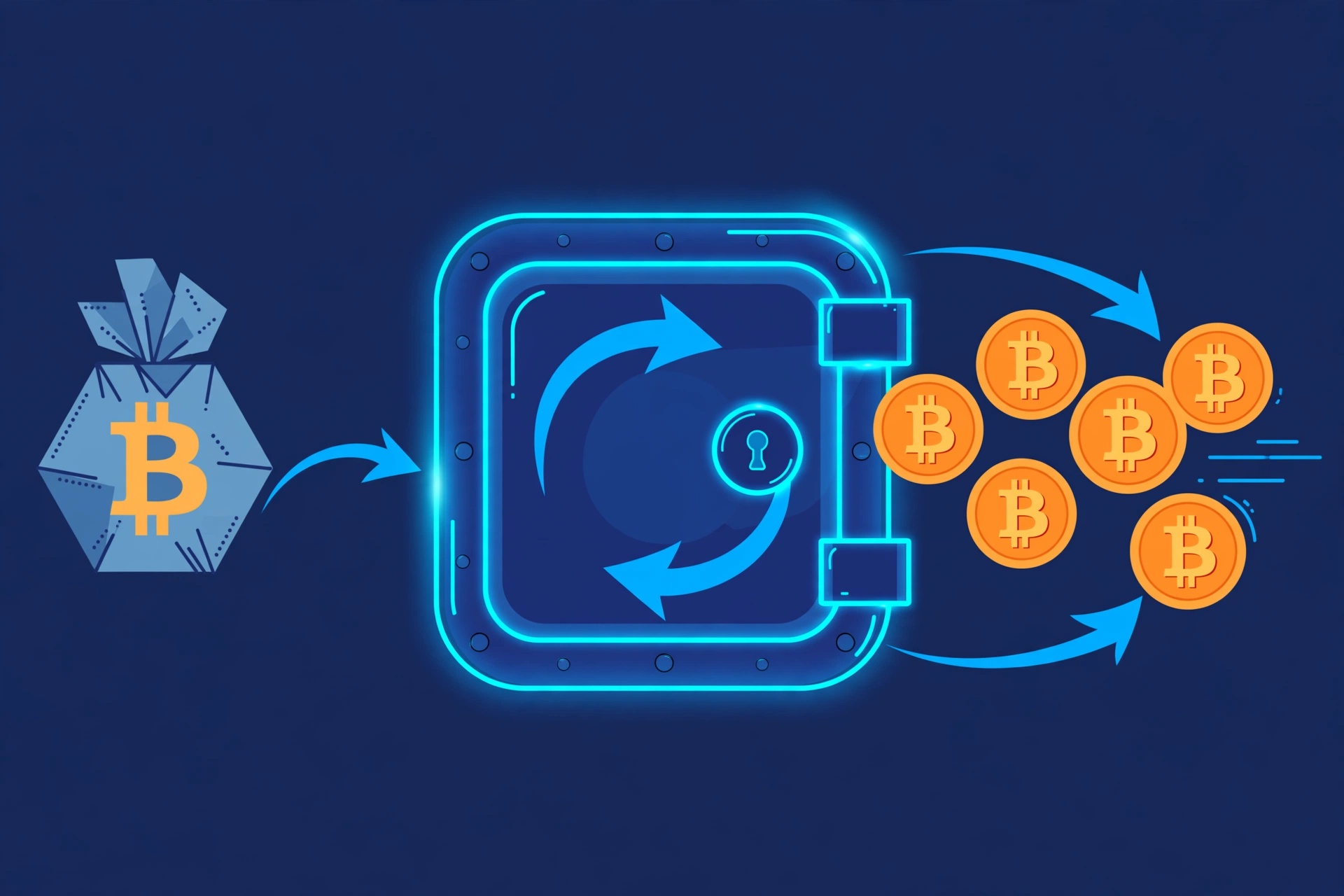
The 6-Step Buying Process
Here’s the actual process, end to end. On a good exchange this takes 15 to 30 minutes the first time (mostly identity verification), and a couple of minutes on later purchases.
Step 1: Create your account with accurate details. Sign up with your real name and an email address you control and check regularly. Use a strong, unique password — ideally generated by a password manager — and enable two-factor authentication immediately, before depositing anything. This is the moment your account is most vulnerable: brand new, no security habits yet, and about to hold money.
Step 2: Complete identity verification (KYC). Regulated exchanges are legally required to verify your identity, usually with a government ID and sometimes a selfie or proof of address. This feels intrusive, but it’s the same process as opening a bank account, and it’s one of the strongest signals that an exchange is operating legally. If an exchange lets you deposit large sums with zero verification, be suspicious, not grateful.
Step 3: Deposit funds. Most exchanges accept bank transfers (cheapest — often free, but can take a day or two) and debit/credit cards (instant, but card fees of 2 to 4 percent are common). For your first purchase, a small bank transfer is usually the best value. Only deposit money you can afford to lose entirely — not rent money, not your emergency fund.
Step 4: Place your buy order. You’ll typically see two options: a simple “buy” button at the current market price, or an advanced order form. Beginners should use the simple buy — it executes immediately at the displayed price. Before confirming, read the preview screen carefully: it shows exactly how much bitcoin you’ll receive after fees.
Step 5: Confirm the purchase landed. After confirmation, check your exchange balance or portfolio page. The bitcoin should appear within seconds to a few minutes. If it doesn’t, don’t panic and don’t re-buy — check the order history first, then contact support with the order ID. Double-purchases from panicked re-clicking are a classic beginner mistake.
Step 6: Move your bitcoin to your own wallet. This is the step most beginners skip, and it’s the most important one in this guide. Bitcoin left on an exchange is bitcoin you don’t fully control — the exchange holds the keys, and if it gets hacked, freezes withdrawals, or goes bankrupt, your coins are at risk.
Fees to Watch Before You Click Buy
Fees are where beginners quietly lose the most money. Nobody steals it — it just evaporates in spreads, markups, and withdrawal charges. Here’s what to look for:
The spread. The “price” you see on a simple buy screen is usually slightly worse than the true market price — that difference is the spread, and it’s the platform’s hidden profit. On major exchanges it’s small (a fraction of a percent); on payment apps and ATMs it can be several percent. You can’t avoid the spread entirely, but you can compare it: check the quoted price against a public bitcoin price tracker before confirming.
Trading or conversion fees. Platforms charge an explicit fee per trade, often 0.5 to 2 percent on simple buys, and much less (0.1 percent or lower) on advanced “pro” order books. Some apps advertise “zero fees” while widening the spread to compensate — always compare the final amount of bitcoin you receive, not the headline fee.
Deposit fees. Bank transfers are usually free or nearly free; card deposits commonly add 2 to 4 percent. That “instant buy with your card” convenience can cost more than you expect on a large purchase.
Withdrawal fees. Moving bitcoin off the exchange to your own wallet costs a network fee (paid to bitcoin miners, not the exchange) plus sometimes a platform markup. Some exchanges inflate this significantly. Check the withdrawal fee schedule before you buy — a cheap purchase means little if withdrawing costs you a painful flat fee on a small amount.
Currency conversion. If you deposit in one currency and the platform prices bitcoin in another, you’ll pay a foreign-exchange markup on top of everything else. Whenever possible, use a platform that operates in your own currency.
A practical rule: for any purchase, note the market price, the amount you’re paying, and the bitcoin you actually receive. Compute your all-in cost as a percentage. If it’s above roughly 2 to 3 percent on a major exchange, you’re overpaying — the comparison table below gives you a sense of the landscape.
| Buying method | Typical all-in cost | Speed | Best for |
|---|---|---|---|
| Major exchange (bank transfer) | 0.5–2% | Minutes to 2 days | Best value for most beginners |
| Major exchange (card) | 2–5% | Instant | Small, urgent purchases |
| Payment/investment app | 1–3% | Instant | First tiny purchase; usually no withdrawals |
| Bitcoin ATM | 7–12% | Minutes | Cash-to-bitcoin emergencies only |
| Peer-to-peer marketplace | Varies widely | Varies | Regions with limited exchange access |
Securing Your Bitcoin After You Buy It
Buying bitcoin is the easy part. Keeping it is where beginners actually lose money — to forgotten passwords, phishing, and exchange failures. Think of your bitcoin as digital cash: whoever holds the private keys can spend it, and there’s no customer service line that can reverse a mistaken transfer.
Understand the core idea: “not your keys, not your coins.” A bitcoin wallet doesn’t store coins; it stores private keys that prove you own coins recorded on the blockchain. If the keys live on an exchange’s servers, the exchange controls your bitcoin. If they live in a wallet you control, you do. Both options have trade-offs, but understanding the difference is what separates informed owners from people trusting a website with their savings.
For small amounts: a reputable mobile or desktop wallet. These apps generate your keys on your device and give you a recovery phrase (usually 12 or 24 words). Anyone with that phrase can take your bitcoin, so write it on paper, store it somewhere safe and private, and never type it into a website, photograph it, or share it with “support.” A mobile wallet is a reasonable home for amounts you’d be comfortable carrying as cash.
For serious amounts: a hardware wallet. These small physical devices keep your private keys offline. They cost roughly the price of a dinner out and are the standard recommendation for anyone holding more than pocket money in bitcoin. Buy only from the manufacturer — never secondhand, since tampered devices exist.
How to withdraw from the exchange: copy your wallet’s receiving address (or scan its QR code), paste it into the exchange’s withdrawal form, and triple-check the first and last characters match. Send a small test amount first — a few dollars’ worth — and confirm it arrives before moving the rest. Then wait for the blockchain confirmation; depending on network congestion and the fee paid, this takes roughly 10 minutes to an hour.
Address types matter more than you’d think. Bitcoin has gone through several address formats over the years, and using the modern ones saves you real money on transaction fees. If you want the background, our explainer on Legacy vs SegWit vs Native SegWit walks through which format to use and why. And if you ever want to spend bitcoin instantly for tiny everyday payments rather than just holding it, setting up a Lightning wallet is the next skill worth learning.
Backups. Write down your recovery phrase by hand — two copies, stored in separate secure locations. Consider who could access your bitcoin if something happened to you; without a plan, your coins are unrecoverable.
Common Mistakes and Scams to Avoid
Almost every bitcoin loss story from a beginner falls into one of these patterns. Read them once and you’ll recognize most attacks before they cost you anything.
Mistake 1: Leaving everything on the exchange. Exchanges get hacked, freeze withdrawals during crises, and occasionally collapse with customer funds. The moment your purchase clears, plan the withdrawal to your own wallet. An exchange is a shop, not a vault.
Mistake 2: Sending to the wrong address. Bitcoin transactions are irreversible. Always copy-paste addresses (never type them), verify the first and last six characters, and do a small test transaction first. Malware exists that silently swaps a copied crypto address for the attacker’s — checking characters defeats it.
Mistake 3: Sharing the recovery phrase. No legitimate company, wallet, exchange, or “support agent” will ever ask for your 12 or 24 words. Anyone who does is stealing from you. This is the single most-attacked secret in all of crypto.
Scam 1: Fake exchanges and lookalike sites. Scammers clone real exchange websites with nearly identical URLs — one letter changed, a different domain ending. Always type the address yourself or use a bookmark you created, and look for the secure connection indicator. If a deal brought you to the site (an ad, a message, a “friend’s” recommendation), treat the site as guilty until proven innocent.
Scam 2: “Double your bitcoin” and guaranteed returns. Send 0.1 BTC, get 0.2 back — it never happens. Neither do guaranteed daily profits from “trading bots” or “mining pools” promoted by strangers. Real investing involves risk; anyone promising risk-free returns is lying.
Scam 3: Pig-butchering and romance-investment fraud. A “friend” met online eventually mentions amazing crypto returns and offers to guide you, directing you to a fake platform showing fake profits. Be deeply suspicious of any investment advice from someone you met on social media or a dating app.
Scam 4: Fake customer support. Search results and social media are full of fake “support” numbers and accounts for real exchanges. Real support will never ask for your password, recovery phrase, or remote access to your computer. Contact support only through the official site or app.
Scam 5: Payment fraud when buying. If you use P2P or buy from individuals, never release payment before the bitcoin is secured in escrow, and never accept overpayment schemes (“I’ll send extra, you refund the difference”). Stick to platform escrow and its dispute process.
A final habit that defeats most of the above: slow down. Every one of these attacks relies on urgency — limited-time offers, account warnings, expiring bonuses. Legitimate bitcoin buying has no countdown timer.
Frequently Asked Questions
The Bottom Line
Buying bitcoin in 2026 is straightforward: choose a reputable regulated exchange, verify your identity, deposit a small affordable amount, buy at market price, and — critically — withdraw your coins to a wallet you control. The purchase itself takes minutes; the security habits around it are what actually protect your money. Compare all-in fees before you confirm, never trust unsolicited offers, and treat urgency as a warning sign.
This guide is for education only — not financial advice.


4 Comments
Pingback: How to Store Bitcoin Safely: 7 Steps (2026)
Pingback: How to Buy Bitcoin With Bank Transfer: 5 Steps 2026
Pingback: What Is Lightning Network? Bitcoin Layer 2 Explained (2026)
Pingback: Bitcoin ETF vs Buying Bitcoin: 2026 Guide